Home Improvement
TV Mounting: What Homeowners Should Know Before Installing a TV on the Wall
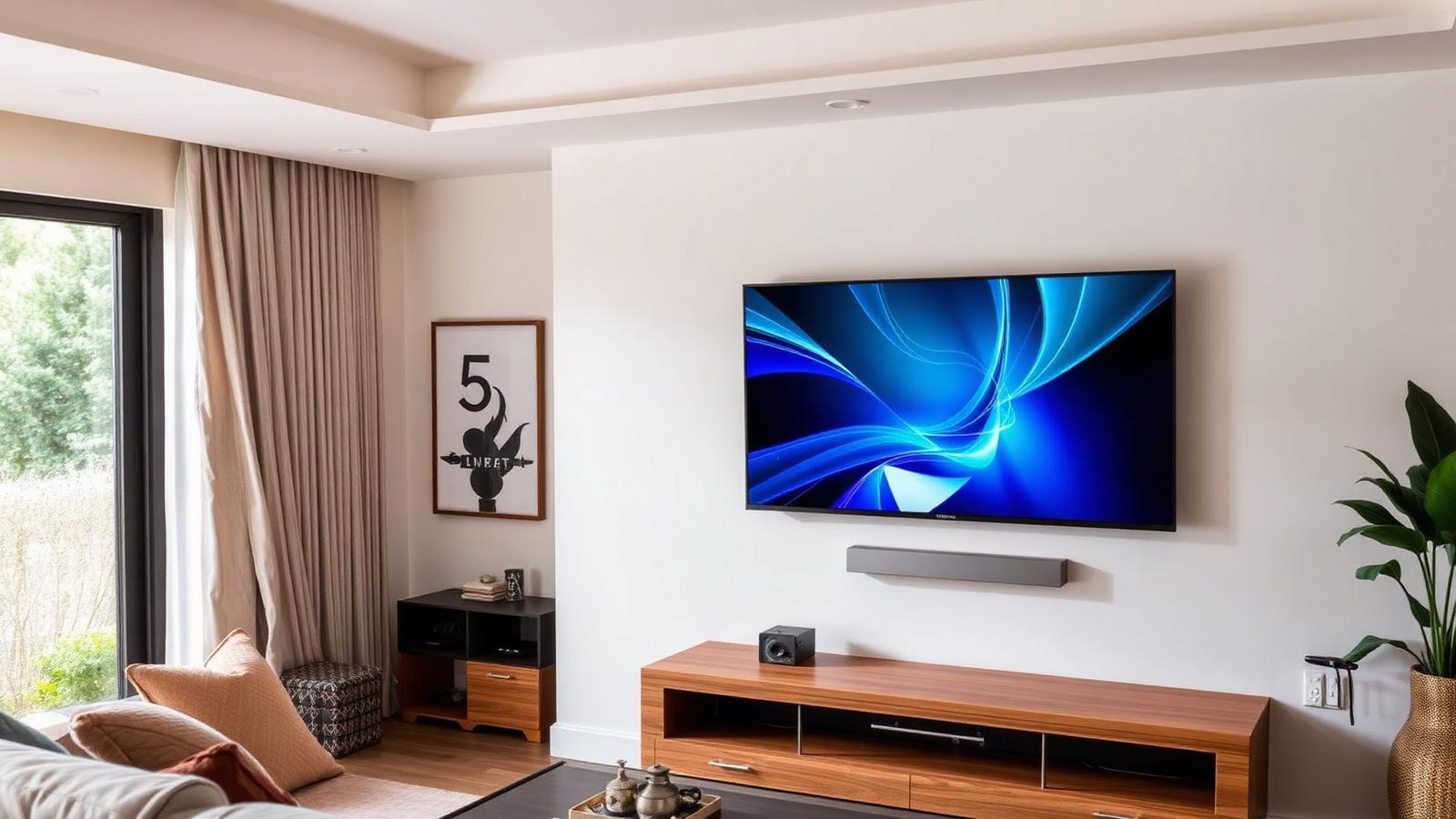
Mounting a TV takes more planning than attaching a bracket. Wall material, mount type, height, cables, and power all shape the finished installation.
Mounting a television can create a cleaner appearance and free up furniture space, but installing a TV on the wall requires more planning than simply attaching a bracket.
The wall material, TV size, mounting hardware, viewing height, cable management, and location of electrical outlets all matter.
For homeowners in Orlando and Central Florida, here are some important things to consider before mounting your TV.
1. Choose the Right Wall
Not every wall is the same.
A TV may be mounted on:
- Drywall
- Wood-framed walls
- Brick
- Stone
- Other masonry surfaces
The mounting method and hardware should be appropriate for the wall construction and the weight of the television.
2. Don't Mount a TV Into Drywall Alone
A television needs secure support.
Depending on the wall construction and mounting location, appropriate anchors or structural attachment points should be used.
The objective is to ensure that the mounting system can safely support the TV. Our TV Mounting service covers this evaluation as part of the installation.
3. Choose the Right Mount
There are several common mounting styles.
Flat Mount
A flat mount keeps the TV close to the wall and provides a clean appearance.
Tilt Mount
A tilt mount allows the screen to angle slightly downward or upward.
This can be useful when the TV is mounted higher than the ideal eye level.
Full-Motion Mount
A full-motion mount allows the TV to move and rotate.
This can be useful in rooms where viewers watch the screen from different positions.
4. What About Mounting Above a Fireplace?
Mounting a TV above a fireplace requires additional consideration.
Heat exposure, viewing height, mounting surface, and the specific fireplace configuration all matter.
A TV that is too high or exposed to excessive heat may not be an appropriate installation.
The location should be evaluated before installation.
5. Can You Hide the Cables?
Cable management can make a major difference in the final appearance. In appropriate drywall walls, cables may be concealed using suitable installation methods. However, wall construction, insulation, fire blocking, electrical configuration, and the location of existing outlets can affect what is possible. The goal is to create a clean installation without compromising the wall or electrical system.
6. What If There Is No Stud Where I Want the TV?
The desired TV location does not always line up exactly with a wall stud. Depending on the wall construction, appropriate mounting solutions may be available. For masonry walls, appropriate masonry anchors can be used. For framed walls, the mounting strategy should account for the available structural support. A TV should never simply be attached to drywall without considering its weight and the mounting system.
7. What Size TVs Can Be Mounted?
Residential TV mounting can accommodate a wide range of television sizes. Larger televisions may require additional equipment or more than one person for safe handling and installation. The TV's weight and mounting pattern are just as important as the screen size.
8. Should the TV Be Level With Your Eyes?
Ideally, the viewing position should be considered before choosing the mounting height. The correct height depends on:
- Seating position
- Room layout
- TV size
- Viewing distance
- Whether the TV is above furniture or a fireplace
A TV that is mounted too high may be uncomfortable to watch for extended periods.
9. Can You Set Up Streaming Devices?
Yes.
After mounting, compatible devices such as:
- Roku
- Apple TV
- Fire TV
- Gaming consoles
- Cable boxes
- Soundbars
can be connected and tested as part of the appropriate setup.
10. What Happens to the Old TV?
If an old television needs to be removed, removal and recycling may be available as an additional service.
Electronic equipment should be handled responsibly and taken to an appropriate recycling facility when possible.
A Professional TV Installation Is About More Than the Bracket
A good TV installation considers the entire setup:
Wall → Mount → Structural support → Height → Cables → Power → Devices → Final positioning
Taking the time to plan these details can make the finished installation look cleaner and help ensure that the television is securely mounted.
Need help with your project?
JM Connect Services provides professional home improvement and handyman services throughout Central Florida.
Request Your Free Estimate →